Why We Offer Laser Engraving… With Very Clear Boundaries
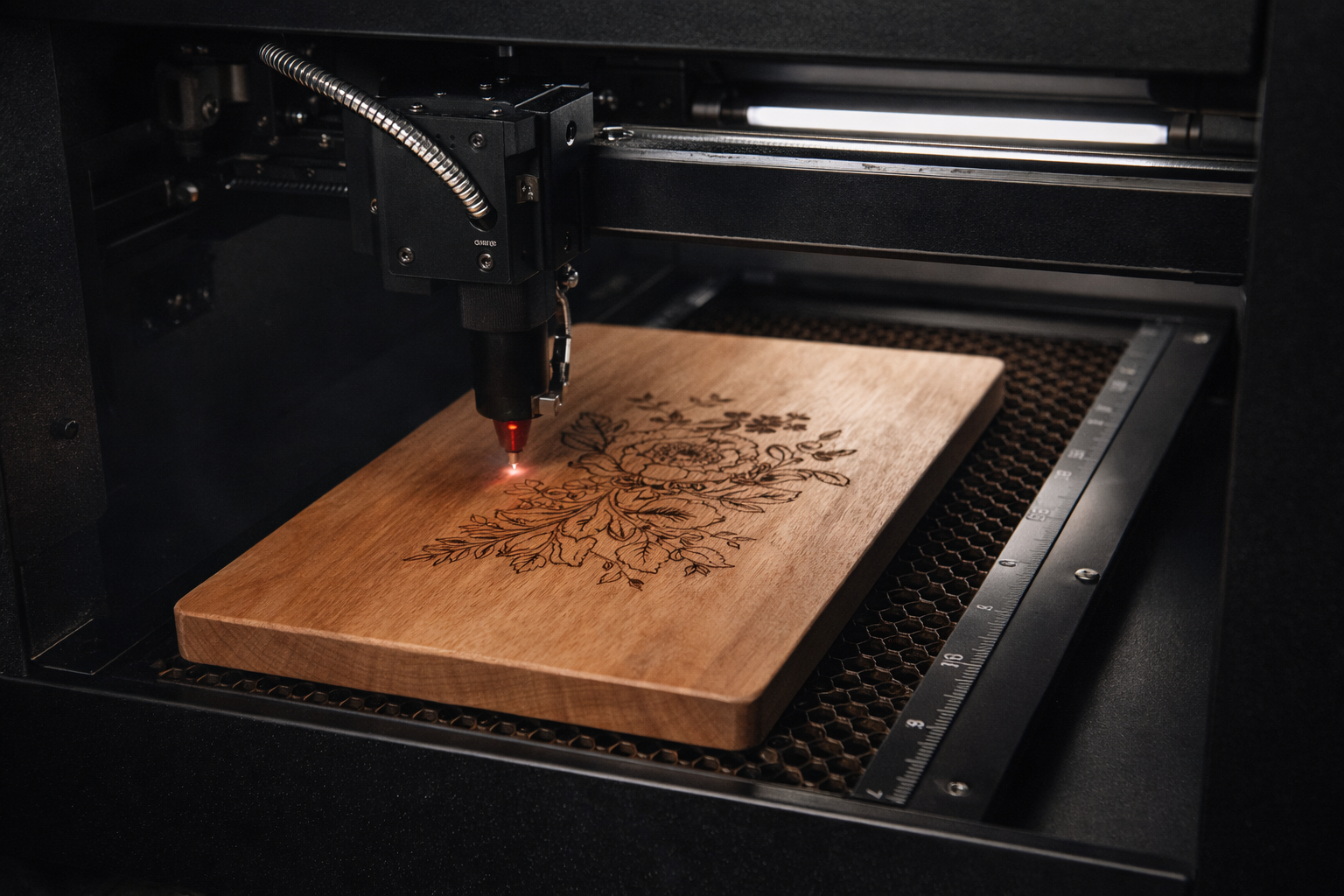
Laser engraving is one of those services that looks simple from the outside. To many people, it seems like you just press a button and a design appears. In reality, it is a technical process that involves safety concerns, material science, machine limitations, and a lot of behind-the-scenes setup time.
We do offer laser engraving.
We just do it intentionally.
That means we focus on what we can do well, safely, and at a quality level we are proud to put our name on.
Why We Don’t Engrave Tumblers or Cups
We are often asked if we engrave cups, tumblers, and drinkware. The short answer is no, and that is a very intentional decision.
We do not own rotary attachments or risers for our tabletop lasers, and we do not plan to invest in them. Engraving tumblers introduces a long list of variables:
File setup issues
Alignment challenges with rotary attachments
Machine calibration risks
Material inconsistencies
The need for taping, test runs, and extra prep before a final pass
All of that adds up to at least an hour of work for what is typically priced at $5–$10 in the market.
If we were producing 50 or 100 of the same design on the same cup, that might make sense. But we do not have that market, and we have no desire to branch into mass tumbler production. Our focus is custom art, not volume drinkware.
Safety Comes First, Always
We are extremely careful about what materials we engrave.
Many plastics and faux leathers are PVC-based. When engraved, they release chlorine gas. That is not something we will ever gamble with.
If we cannot verify that a material is PU-based or otherwise laser-safe, we will not engrave it. No project is worth risking our health or the health of our family. We will never rely on “someone said it should be fine” when the consequences are real.
This is why, even when asked about items like keychains, journals, or helmet face masks, we always check materials first. If we cannot confirm safety, the answer is no.
What We Do Love Engraving
We are much more flexible when it comes to materials we trust and understand.
Real Wood
We specialize in engraving on real hardwoods that have not been spray-coated. We do not use pine. Pine is too soft and inconsistent, which leads to uneven engraving.
We use hardwoods because:
The grain is tighter
The density is more consistent
The finished result is cleaner and more durable
That said, we generally avoid:
Photo engravings on real wood
Heavy text projects on real wood
Wood density varies even within the same board, and we want results we can stand behind.
Acacia Wood
We often make exceptions for acacia wood items, especially the kinds you find at stores like Marshall’s. Acacia engraves beautifully and consistently when untreated.
Plywood
We also have no issue engraving on plywood, especially for projects where a stable, uniform surface is important.
About Our Laser and Materials
We use a CO₂ laser, which is designed for organic materials. That means:
Wood
Certain leathers
Some plastics that are verified safe
Paper and similar materials
It does not include metals.
Yes, there are sprays that can help create a marking effect on metal. But without a specific product line that we are producing in bulk, that process is not worth the time, cost, or inconsistency for us.
Instead, we use Metalgraph, a laserable material from Romark, to create plates for our plaques. This allows us to deliver a professional, long-lasting result without compromising safety or quality.
Why We Don’t Engrave Glass
This one is simple.
We just don’t like it.
And we are okay with that.
Not every service has to be offered by every shop. We focus on what aligns with our skills, our standards, and the kind of work we enjoy creating.
Why We Work With a 12×20 Enclosed Laser Bed
We recently made the intentional decision to move back to a 12×20 laser bed, and we only use fully enclosed lasers in our studio.
Many laser systems offer passthrough features that allow longer objects to extend beyond the machine bed. While that sounds flexible on paper, in practice it still comes with real limitations:
Alignment challenges on extended pieces
Inconsistent engraving depth across longer runs
Increased setup and testing time
Higher risk of shifting or warping during the process
We chose not to build our workflow around those constraints.
We also made this change for a bigger reason:
We do not enjoy working with oversized items.
It does not match the goals of our business or the kind of work we want to be known for.
Our focus is on quality, meaningful pieces, not giant ones.
Smaller formats allow us to:
Maintain tighter quality control
Work more precisely
Reduce unnecessary risk
Stay aligned with the kind of custom art we actually love making
What We Really Specialize In
At the heart of everything we do is this:
We create unique art, strong visual designs, and quality logo work that is meant to last.
We want the pieces we make for you to live in your home, be displayed proudly, and hold meaning for years, not end up in a box in the garage.
We also do all of our SVG design work in-house. That is not common in many home-based laser businesses. It allows us to control quality from start to finish, instead of relying on generic files or rushed setups.
Our Boundaries Are Part of Our Quality
Saying no to certain projects is not about being difficult. It is about:
Protecting safety
Protecting quality
Protecting the integrity of our work
Protecting the people behind the machines
We offer laser engraving where it makes sense, where it can be done safely, and where the finished product reflects the level of craftsmanship we believe in.
If that aligns with what you are looking for, we would love to create something meaningful with you.