Why We Closed Our Storefront at Fort Irwin
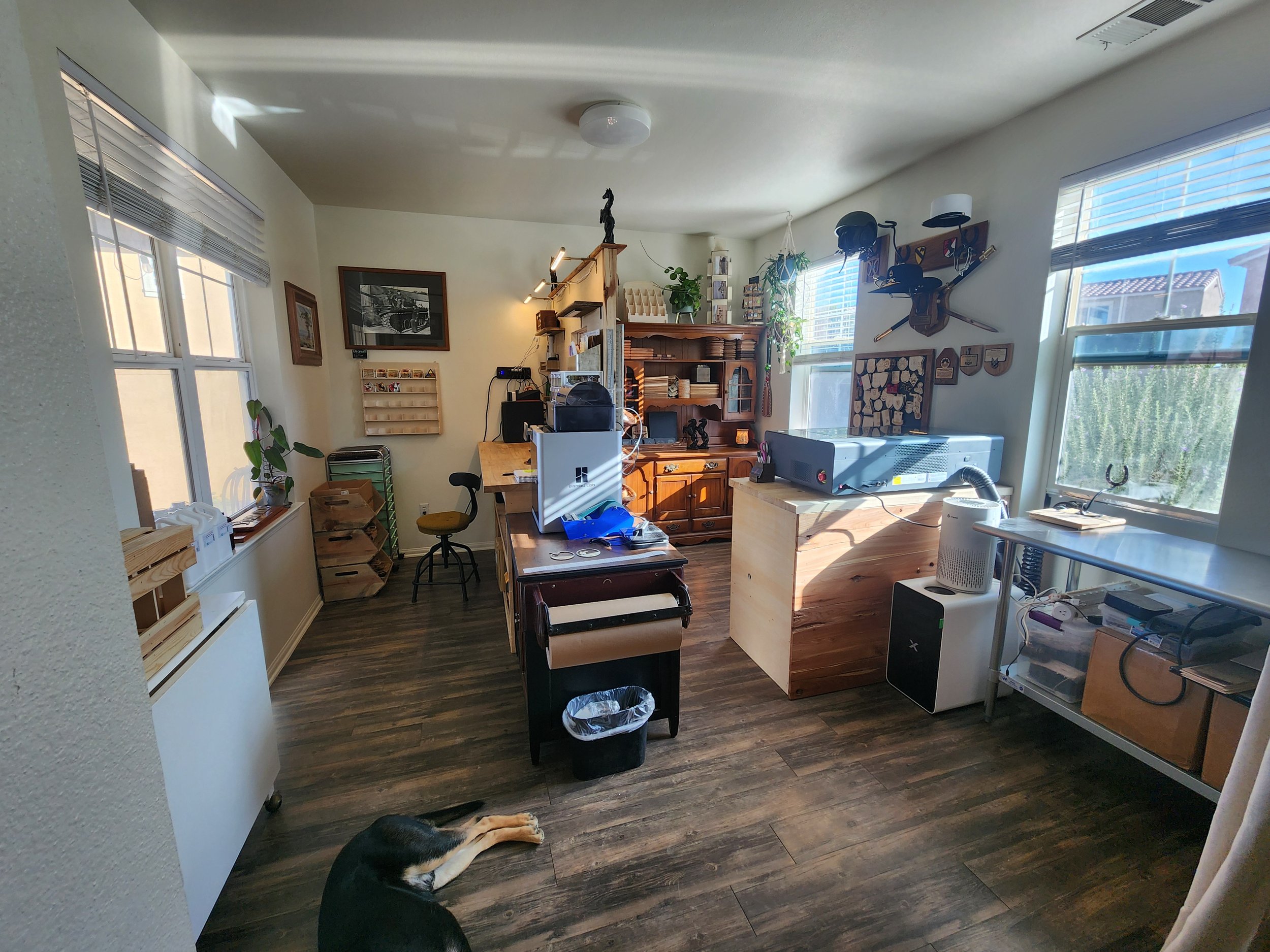
For two years, our little shop inside the Fort Irwin PX was one of the biggest labors of love we ever took on. We built it from the ground up, pieced together exactly the way we envisioned. Better lighting. Better organization. Better systems. A place where plaques, candles, custom gifts, and handmade art had a home that felt like "us." By the end, the store ran more smoothly than ever, with fewer hiccups and a clear workflow.
So why close something we poured so much time, money, and heart into?
The answer is both simple and complicated, and every bit of it reflects the reality of running a small business on a small training base in the middle of the Mojave Desert.
A Training Base Does Not Follow a Normal Calendar
Fort Irwin is not a typical town with a regular rhythm of weekends, holidays, and predictable shopping patterns. It runs on a training calendar. When half the base is in the field, the base is quiet. When a Rotational Training Unit, or RTU, is here, the population briefly grows and sales grow with it. When RTU leaves, the base shrinks again and the cycle repeats.
Our two main customer groups were:
Service members stationed here
Visiting service members with the rotational unit
For roughly 100 days of the year, those visiting service members were not here at all. Add in two block leave periods where a large portion of the base clears out, and the seasonal whiplash becomes obvious.
A Community in Constant Transition
Fort Irwin’s population turns over constantly. Many assignments here last only 12 to 18 months. Spouses often shoulder everything at home while their service member is away training, which means fewer outings, fewer shopping trips, and fewer opportunities to build ongoing customer relationships.
Even the PX is not a regular stop for many families anymore. On top of that, with more people stepping away from traditional social media, reaching potential customers became harder each month.
These factors on their own are small, but together they shaped an unpredictable and inconsistent customer base.
Overhead Does Not Care If It Is a Slow Week
Rent was not the issue. AAFES scales rent as a percentage of sales, which helped.
Everything else was the challenge.
Running a brick and mortar space means paying for:
Labor, at a fixed cost regardless of foot traffic
Employer payroll taxes including half of Social Security and Medicare, unemployment insurance, and payroll filing fees
A point of sale system that could manage inventory, orders, employee hours, and payroll
A phone plan that doubled as the store’s internet connection
The California franchise tax of $800 per year
Business insurance at around $500 per year
Credit card processing fees
Monthly Square system fees that totaled about $160 per month
Our PX location was not connected to a fiber line, so Frontier would not install internet. We had to run the entire store from a phone hotspot. When thousands of visitors came through the base, internet speeds slowed dramatically. During those times, no admin work could be done at the store. No design work. No custom orders. Often no painting either because being in the store means greeting people and talking with customers, which is part of the experience but interrupts creative work.
After a full day in the store, we still went home to finish the rest of the business: pouring candles, designing plaques, managing orders, responding to messages, painting, bookkeeping. We did hire an employee, but we could only afford a few hours a day. It helped, just not enough to offset the realities of the base and the demand fluctuations.
The Hard Truth: The Sales Pattern Could Not Support the Overhead
We did not close because the store failed. We closed because the location could not support the ongoing cost of operating at the level required.
Fort Irwin is a unique duty station filled with incredible people doing challenging work. It just is not built for a traditional storefront business model that depends on consistent daily traffic and a stable local population.
Moving back online allows us to do what we do best: create thoughtful, meaningful, handcrafted pieces without the weight of overhead that does not match the rhythm of the community we serve.
We loved having a storefront. We loved meeting so many of you in person. We are excited to take everything we learned during those two years and pour it into Ink Stick’s next chapter.